In overseas private domain operations, customer service conversations are more than immediate service touchpoints. They are valuable assets for enterprises. These assets help accumulate user insights, optimize product experience, and drive business growth. Many companies view customer service as a cost center. They neglect its strategic value as a “data goldmine.”
Through systematic retrospective analysis, companies can transform massive amounts of conversations into actionable long-term value. This achieves a shift from passive response to proactive growth. Practical observations show that companies prioritizing conversation retrospective analysis often have significantly higher private domain repurchase rates. Their product iteration efficiency also exceeds the industry average. This article systematically explains how to build a conversation retrospective analysis mechanism. It helps overseas companies extract sustainable competitive advantages from customer service conversations.
I. Core Value and Specificities of Overseas Scenarios
Conversation retrospective analysis is a structured process. It analyzes historical communication records between customer service and users. It extracts insights from them. It transforms those insights into business actions.
Core value is reflected in four dimensions:
- User Insight Mining: Revealing real pain points, preferences, and decision-making paths. This goes beyond surface data from questionnaires.
- Service Optimization: Identifying high-frequency issues and shortcomings in communication techniques. This improves future response efficiency and conversion rates.
- Product and Marketing Iteration: Providing firsthand data for product feature optimization, pricing strategies, and marketing content.
- Team Capability Enhancement: Accelerating customer service professional development through case studies.
In overseas markets, dialogue debriefing faces unique challenges. These include multilingualism, cultural differences, and time zones. Users in different regions have vastly different expression habits. For example, users in Europe and America prefer direct feedback. Southeast Asian users focus more on relationship building. Debriefing needs to incorporate cultural sensitivity analysis. This avoids misinterpretations. Privacy compliance (e.g., GDPR) requires anonymization and minimization of dialogue data processing.
II. Preparation for Building a Dialogue Debriefing Mechanism
Effective debriefing requires establishing a basic framework in advance. This avoids fragmented operations.
1. Clearly Define Debriefing Goals and Scope
Differentiate between three types:
- Daily debriefing (daily/weekly high-frequency issues).
- Thematic debriefing (specific promotions or product launches).
- In-depth debriefing (quarterly/annual strategic insights).
Prioritize high-value dialogues: high-conversion cases, escalated complaints, and abandoned order inquiries.
2. Data Collection and Storage Standards
Ensure the customer service system records complete dialogues. Include timestamps, user tags, channel sources, and result tags. Utilize structured fields such as “Problem Type,” “Sentiment Tendency,” “Solution,” and “Follow-up Actions.” This facilitates subsequent retrieval and analysis. Adhere to data privacy regulations. Retain only essential information.
3. Tools and Role Division
Introduce dialogue analysis tools. These should support NLP sentiment recognition, multilingual translation, and keyword extraction. Examples include Zendesk Explore and Intercom Reports. Or integrate with an AI analysis platform. Establish a debriefing team. Include customer service supervisors, product managers, marketing specialists, and data analysts. Form a cross-departmental collaborative mechanism.
III. Practical Steps for Extracting Long-Term Value
Step 1: Dialogue Classification and Structured Organization
Use a standardized tagging system to classify dialogues. For example:
- Inquiries: Product features, pricing, usage methods.
- Complaints: Logistics delays, quality issues, after-sales experience.
- Conversions: Key decision points from inquiry to order placement.
- Lost: Abandoned orders, refunds, or negative feedback.
Combine with AI assistance. Achieve automatic tagging and clustering analysis. Quickly identify high-frequency topics and abnormal patterns.
Step 2: In-depth Analysis and Insight Extraction
- Quantitative Analysis: Statistically analyze problem distribution, resolution time, and conversion rate. Create trend charts. For example, if 40% of user inquiries in a certain region are about payment methods, optimize local payment integration.
- Qualitative Analysis: Extract typical dialogue samples. Analyze user language patterns, cultural preferences, and unmet needs. Use the SWOT framework or fishbone diagram to identify root causes.
- Cross-dimensional Correlation: Integrate dialogue data with CRM purchase records and webpage behavior data. Build a complete user journey profile. For example, users who repeatedly inquire about the same function but fail to convert may indicate insufficient product documentation or mismatched pricing.
Step 3: Value Conversion and Action Loop
Review results need quick implementation. Form an “insight-action-validation” cycle:
- Service Optimization: Update the FAQ knowledge base. Optimize script templates. Improve chatbot accuracy.
- Product Iteration: Feed back high-frequency pain points to the product team. Prioritize them. Set follow-up milestones.
- Marketing Empowerment: Extract real user language for content creation, advertising materials, or personalized push notifications.
- Team Empowerment: Establish a “Learning Case Library” and a “Lesson-Teaching Case Library.” Improve customer service skills through weekly sharing sessions.
Establish a mechanism to track post-review effectiveness. For example, monitor improvement of relevant KPIs (e.g., increased problem resolution rate, increased repurchase rate) after monthly reviews.
Step 4: Overseas Adaptation Strategy
- Multilingual Processing: Introduce professional translators or AI translators with human calibration. Ensure no loss of cultural nuance.
- Geographically Segmented Post-mortem Reviews: Analyze separately by major markets (e.g., Europe and America, Southeast Asia, Middle East). Avoid a one-size-fits-all approach.
- Cultural Sensitivity Review: Identify potential cultural conflict points. Examples include differences in holiday-related inquiries or communication etiquette.
IV. Practical Techniques to Improve Post-mortem Effectiveness
- AI-Enabled Acceleration: Use large language models for dialogue summarization, sentiment polarity analysis, and trend prediction. Reduce manual input.
- Incentive Mechanism Design: Incorporate post-mortem contributions into customer service performance evaluations. Create a “Best Insight Award.” Encourage frontline staff to proactively report high-quality samples.
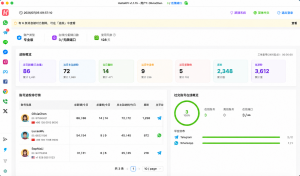
- Visual Presentation: Display post-mortem results through dashboards. This facilitates management decision-making.
- Regular Audits and Iterations: Review the debriefing mechanism itself quarterly. Optimize the tagging system and analytical dimensions.
V. Common Pitfalls and Successful Practices
Common pitfalls include:
- Superficial debriefing (mere statistics without action).
- Data silos (separation of dialogue and business data).
- Privacy compliance risks.
Recommendation: Start with small-scale pilot programs. For example, debrief high-value dialogues for one week first. Then gradually expand the scope.
Leading practices: One cross-border e-commerce company optimized its local warehousing and distribution strategy by debriefing logistics complaints. This significantly improved user satisfaction. Another SaaS company extracted requirements from feature consultations. This accelerated the iteration cycle.
Conclusion
The power of dialogue debriefing lies in transforming “one-off services” into “continuous assets.” It improves immediate conversion rates. It also provides solid support for long-term user value mining and business strategy. Only by building a systematic, intelligent, and closed-loop debriefing mechanism can overseas companies transform private domain customer service from a cost center into a growth engine.
We recommend immediately launching a pilot program for initial dialogue debriefing. Analyze recent high-frequency conversations. Continuously optimize the process in practice. If you encounter specific challenges in dialogue data governance or debriefing tool selection, please share your experiences in the comments section. Or contact us for professional guidance. Debriefing is more than just looking back. It is a strategic investment for the future.