A truly effective private domain operation is built on a complete and systematic framework: Audience Segmentation + Structured Touchpaths + Content Rhythm + Conversion Actions + Repurchase Management.
Missing any component often results in an operation that appears active but delivers minimal results. This article provides a practical, step-by-step guide to building a scalable and sustainable private domain system from scratch.

I. Core Principle: Private Domain Usually Fails Not Because of Insufficient Effort, But Because the Sequence Is Wrong
Many businesses begin their private domain journey by focusing heavily on adding contacts, creating groups, posting frequently on social platforms, running promotions, offering incentives, and pushing products. While the activity level is high, the outcomes are often disappointing.
The root cause is jumping directly into execution without proper design.
Private domain is not about broadcasting whatever comes to mind. It is about guiding users along a clear, value-driven journey after they connect with you. This journey must effectively address four fundamental questions:
- Why should they keep you in their contacts?
- Why should they trust you?
- Why should they buy from you now?
- Why should they return to purchase again?
Only when this path is deliberately designed can private domain transform from a temporary traffic pool into a long-term, high-value asset.
II. Step 1: Segment Your Audience — The Most Critical Yet Overlooked Foundation
A common reason for private domain failure is treating all customers as the same audience. Users at different stages have vastly different needs, and applying identical messaging inevitably leads to poor results.
We recommend starting with a practical four-category segmentation:
Category 1: New Contacts Characteristics: Recently added via advertising, live streams, short videos, or events. Primary Goal: Deliver a strong welcome and clear value positioning without immediate selling.
Category 2: Consulted but Not Converted Characteristics: Showed interest but remain hesitant. Primary Goal: Address objections and drive the first purchase.
Category 3: One-Time Buyers Characteristics: Completed their first purchase but have not yet repurchased. Primary Goal: Enhance their experience and encourage repeat purchases.
Category 4: Silent or High-Value Existing Customers Characteristics: Long inactive or high-order-value customers with strong repurchase potential. Primary Goal: Re-engage, deepen relationships, drive repeat business, and generate referrals.
Proper segmentation enables you to deliver the right message to the right person at the right time.
III. Step 2: Design a 7-Day Onboarding Path for New Contacts
For newly added contacts, establish a standardized 7-day engagement sequence. The following framework has proven effective across various industries:
- Day 1: Welcome & Positioning Send a concise, sincere message introducing who you are and the value you provide. Avoid product promotions at this stage.
- Day 2–3: Build Initial Trust Share useful content such as frequently asked questions, real usage scenarios, customer feedback, and category-specific pitfalls to reduce decision-making barriers.
- Day 4–5: Address Key Objections Tackle core concerns including price, effectiveness, quality, suitability, competitive differences, and after-sales support with professional, helpful responses.
- Day 6–7: Natural Conversion Guidance Present well-timed offers, bundle recommendations, or social proof to provide clear, reasonable reasons to buy, along with easy purchase access.
This rhythmic approach prevents aggressive selling while significantly improving conversion rates.
IV. Step 3: Implement a Structured Content System for Moments and Groups
High-quality private domain content is not about posting volume, but about delivering consistent value. Organize your content into four balanced categories:
- Trust-Building Content: Industry knowledge, buying guides, usage tips, and common pitfalls.
- Social Proof Content: Real customer feedback, before-and-after results, repeat purchase stories, and testimonials.
- Conversion-Oriented Content: Product value breakdowns, competitive advantages, limited-time offers, and compelling purchase reasons.
- Relationship Maintenance Content: Industry insights, behind-the-scenes updates, team stories, festive greetings, and practical tips.
A well-balanced content mix encourages users to keep you long-term rather than viewing you as just another advertising account.
V. Step 4: Give Your Groups a Compelling Reason to Exist
Groups often become inactive because users see no ongoing value. Instead of using groups solely for promotions, provide clear benefits such as early access to deals, knowledge sharing, after-sales support, peer discussions, or exclusive member privileges.
Maintain a consistent rhythm (e.g., weekly Q&A sessions) and initiate engagement with valuable questions or insights rather than generic prompts.
VI. Step 5: Focus on Repurchase and Customer Reactivation — The Real Profit Engine
The greatest value of private domain lies not in first-time sales, but in repeat purchases and reactivation of existing customers. After a sale, continue with usage guidance, experience follow-ups, and timely personalized recommendations. Reactivation campaigns should be data-driven, based on purchase history, rather than generic mass promotions.

VII. How HelloKPI Empowers Overseas and Private Domain Teams
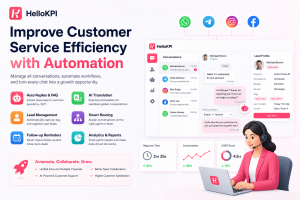
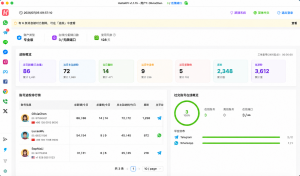
HelloKPI is a results-oriented intelligent operations system (SCRM) specifically designed for overseas expansion and private domain management. Key features include global multi-language translation, multi-account group management, ticketing systems, and advanced AI customer service.
We help businesses upgrade from manual trial-and-error to systematic, intelligent operations by:
- Enabling automatic audience segmentation and smart tagging;
- Building and automating multi-language touchpoint paths;
- Standardizing content libraries and scripts with AI-assisted generation;
- Deploying AI customer service to handle high-frequency inquiries efficiently;
- Connecting the entire funnel — from traffic acquisition to customer service, conversion, and repeat purchases.
VIII. Three Actions You Can Take Today
- Segment your current contacts into the four categories and apply proper tags.
- Document your standardized 7-day onboarding path for new contacts.
- Compile the top 20 most frequently asked customer questions as core material for content and AI training.
Conclusion
The success of private domain operations depends not on how many messages you send, but on the quality of the system you build. Without segmentation, content misses the mark. Without structured paths, users disengage. Without rhythm, results fluctuate. Without repurchase focus, true value remains unrealized.
HelloKPI is committed to helping overseas-oriented businesses establish clear, scalable, and consistently profitable private domain systems.
Visit https://hellokpi.com/ to learn how we can support your growth.
Contact customer service for a free trial opportunity!!! @Hellokpi00, @Hellokpi01