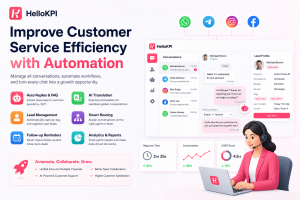
gainst the backdrop of accelerated global digital transformation, overseas companies are facing a strategic shift. This shift is from traffic acquisition to private domain accumulation. Private domain operations achieve long-term value mining. They build customer assets under the company’s own control.
The customer service system is the core touchpoint of private domain operations. It directly determines user trust, repurchase rate, and final conversion efficiency. According to industry data, a high-conversion customer service system can increase conversion rates by 30%-50%. This article provides systematic guidance for overseas companies. It covers strategic planning, system construction, and practical optimization. It helps build an efficient, professional, and high-conversion customer service system.
I. Core Value and Unique Characteristics
The core of overseas private domain operations is converting scattered traffic into repeatable private domain assets. This traffic comes from platforms such as TikTok, Instagram, Facebook, and WhatsApp. Unlike the domestic WeChat ecosystem, the overseas environment has unique characteristics. These include multiple languages, time zones, and significant cultural differences.
The customer service system has multiple roles. It answers inquiries. It also builds brand image, responds to crises, and supports precision marketing.
The value of an efficient customer service system is reflected in three aspects:
- Improving user experience and reducing churn.
- Driving personalized service through data insights. Improving conversion rates.
- Forming a closed-loop feedback mechanism. Supporting product iteration and marketing optimization.
Enterprises lacking a systematic approach often face problems. These include delayed responses, communication barriers, and lack of trust. Their private traffic suffers from a significant “funnel” effect.
II. Preparations for Building the System
Before building a customer service system, enterprises need to complete three basic preparations.
1. Define Goals and KPIs
Define core indicators. These include response time (target ≤ 2 minutes), resolution rate (≥ 85%), conversion rate (inquiry to sale ratio), and NPS (Net Promoter Score). In overseas scenarios, pay additional attention to cross-language conversion rates and cultural compatibility.
2. Customer Profiling and Segmentation
Use a CRM system to analyze private domain user data. Segment users by purchase stage (new, repeat, loyal). Also segment by regional culture and consumption preferences. This provides a basis for personalized services.
3. Compliance and Risk Assessment
Strictly adhere to data privacy regulations such as GDPR and CCPA. Ensure compliance in information collection, use, and storage throughout the customer service process. Assess time zone coverage and language support needs. Avoid legal risks arising from compliance oversights.
III. Steps to Build a High-Conversion System
1. Team Building: Emphasizing Both Professionalism and Scalability
Establish a hybrid customer service team. Include AI-assisted agents, localized foreign customer service representatives, and core Chinese-speaking staff. Start with a “1:3:6” ratio. This means 1 supervisor, 3 senior agents, and 6 basic agents. Bring in local talent to improve cultural compatibility. Core requirements include multilingual proficiency (English, Spanish, Arabic, etc.) and product expertise training.
2. Tool Selection: Intelligent and Integrated
Select a customer service platform that supports multi-channel access. Examples include Zendesk, Intercom, or domestic tools adapted for overseas markets. These should integrate with WhatsApp Business API and TikTok customer service.
Core functions should include:
- Intelligent Chatbot: 24/7 automatic replies to frequently asked questions. Preset multilingual FAQs.
- Unified Omnichannel View: Integrates email, SMS, and social media platforms. Creates a unique customer profile.
- Data Analytics Module: Real-time monitoring of conversation duration, sentiment analysis, and conversion paths.
- Automated Workflow: Order follow-up, abandoned order alerts, and satisfaction surveys.
Tool selection principles: Prioritize high scalability and data security. Ensure seamless integration with enterprise ERP and marketing automation systems.
3. Process Design: Standardization + Personalization
Establish SOPs (Standard Operating Procedures). Cover four stages: reception, problem resolution, escalation handling, and after-sales care. Introduce a “tiered response mechanism”:
- Simple issues handled by chatbots.
- Complex issues handled by human agents.
- Urgent issues addressed by supervisors.
Design personalized pathways. For example, push localized promotional plans based on user location. Use culturally appropriate communication scripts.
4. Training and Performance Optimization
Conduct regular training sessions. Cover product knowledge, cultural sensitivity, and communication skills. Use role-playing and AI-simulated scenarios. This enhances customer service’s ability to handle complex situations.
Performance evaluation combines quantitative KPIs with qualitative user feedback. Establish incentive mechanisms (such as conversion bonuses). This ensures team motivation.
IV. Practical Strategies for Improving Conversion
1. Personalized Service-Driven Conversion
Push precise recommendations based on user history. For example: “The X product you purchased last month is now available with an upgraded version and exclusive discounts.” Use A/B testing to optimize scripts. Achieve a seamless transition from consultation to sale.
2. Multi-Touchpoint Closed-Loop Marketing
Automatically trigger thank-you emails, coupons, or repeat purchase reminders after customer service ends the conversation. Form a “service-marketing-repeat purchase” closed loop.
3. Data-Driven Continuous Iteration
Review conversation records monthly. Identify high-frequency pain points. Optimize products or processes. Introduce sentiment analysis tools. Provide early warnings of potential customer churn.
4. Crisis Management Mechanism
Develop a rapid response template for negative reviews. Proactively disclose the handling process. Transform crises into opportunities to enhance brand trust.
V. Common Pitfalls and Successful Practices
Common problems include:
- Data silos caused by fragmented tools.
- Misunderstandings due to ignoring cultural differences.
- Reduced emotional connection due to over-automation.
Recommendation: Start with small-scale testing. Gradually expand the system’s coverage.
Successful practices: Some leading overseas companies have increased private domain repurchase rates to more than double the industry average. The core lies in implementing three principles: user-centricity, data-driven approach, and system-backed support.
Conclusion
Building a high-conversion overseas private domain customer service system is not a one-time project. It is a process of continuous optimization and iterative evolution. Companies need to develop phased implementation plans. Base these on their own scale and target market. Continuously verify and adjust in practice. Only by transforming customer service from a “cost center” to a “growth engine” can the long-term value of private domain operations be truly unlocked.
We recommend that companies immediately conduct a diagnostic assessment of their customer service system. Or consult professional overseas service agencies to accelerate implementation. If you encounter specific challenges in actual operation, please share them in the comments section. Or contact us for customized solutions. An efficient customer service system will become your core competitiveness in your overseas journey.